
Why Your Allowance Might Feel Tighter Even Though Stocks Are Doing Okay
Coffee Break Summary:
- Even though there’s a big conflict happening far away, the main stock market (called the S&P 500) hasn’t dropped much.
- However, experts are worried because stocks seem a bit too expensive right now, and things like oil prices going up could cause problems.
- While there are risks, the US stock market has a history of bouncing back from big global problems, and companies are still doing pretty well.
The World’s a Bit Rocky, But the Stock Market Isn’t Panicking (Yet)
Imagine your favorite video game. Sometimes, unexpected things happen in the game – maybe a new, really tough boss appears, or a rare item suddenly becomes super expensive. You might get a little worried, right? Well, something similar is happening in the real world of money and investing, but the main “game board” for big companies, called the S&P 500, is acting surprisingly calm.
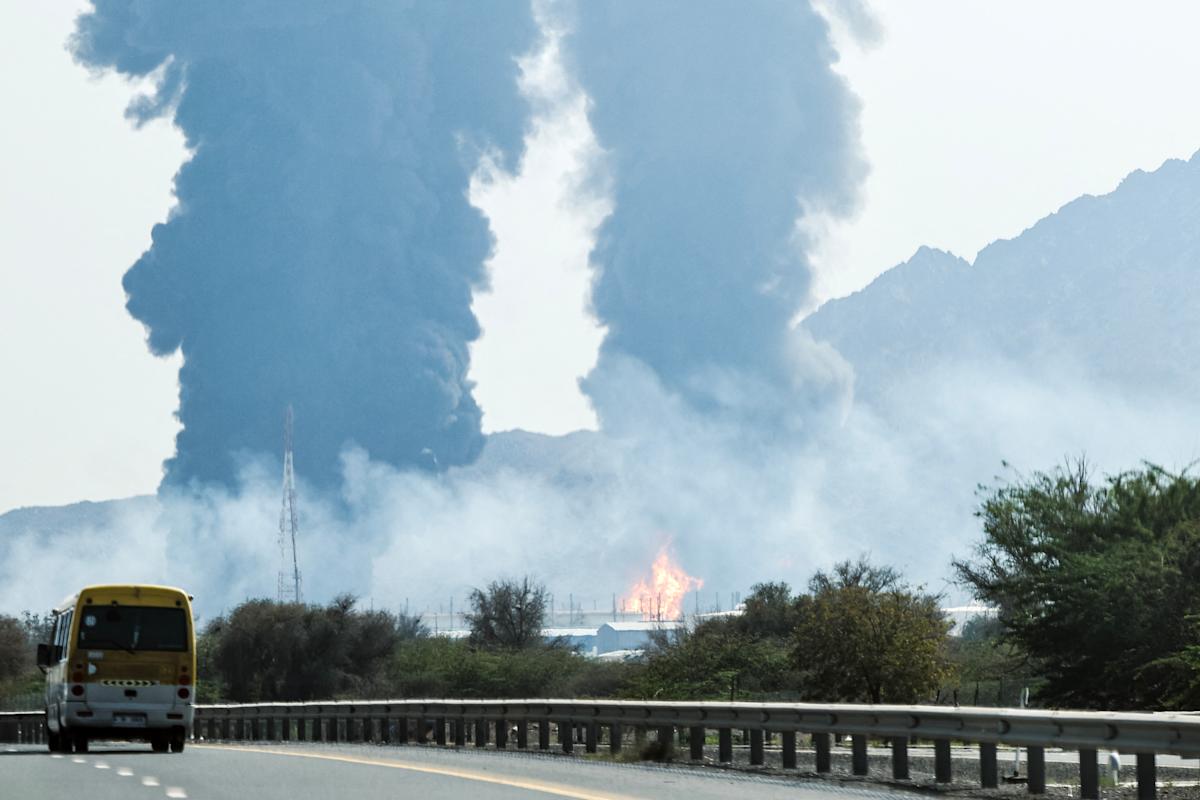
Right now, there’s a major conflict happening in a place called Iran, and it’s been going on for a few weeks. You might think this would make the stock market crash, like a game character losing all its health. But here’s the weird part: the S&P 500, which is like a scoreboard for the 500 biggest companies in the US, has only dropped a little bit from its highest point ever. It’s like that tough boss appeared, but most of the game characters are still running around, collecting coins and completing quests without much trouble.
Now, why is this happening? Well, experts at a big financial company called Goldman Sachs are looking at this situation closely. They’re saying that even though things seem okay on the surface, there are some hidden worries. Think of it like this: if the price of your favorite snacks at the corner store suddenly doubled, you’d probably start to worry about how much you can afford to buy, right? That’s kind of what’s happening with stocks. They’re still priced as if everything is going to be perfect, even though there are some big “snack price increases” happening in the world.
One of the biggest “snack price increases” is related to oil. You know, the stuff that makes cars go and powers factories. Because of the conflict in Iran, oil prices have been going up. When oil gets more expensive, it affects almost everything. It costs more to make and ship goods, which means prices for all sorts of things can go up – that’s called inflation. And when inflation rises, it can make people and businesses spend less, which can slow down the whole economy.
Goldman Sachs strategists (they’re like the smart analysts who study these things) are saying that if oil prices stay high for a long time, it could cause a chain reaction. First, it could make the bond market (which is another way people invest their money) get nervous. Then, this nervousness could spread to the stock market, causing stock prices to fall more than they have. They also pointed out that recently, there have been signs that the job market is slowing down a bit. This means people might have less money to spend, making the economy less able to handle any new problems.
So, the situation is a bit like a balancing act. On one hand, the stock market seems to be holding strong, and companies are still making money. But on the other hand, there are these big global events, like the conflict and rising oil prices, that could easily tip things over.
The ‘Prices Are Too High!’ Problem
Let’s go back to our video game analogy. Imagine you’ve been playing a game for a while, and you’ve collected a lot of powerful items and skills. You feel pretty good about your character’s strength. Now, imagine a new expansion pack comes out, and it’s supposed to be super challenging. If your character is already at its absolute peak strength, and the new challenges are even tougher, you might start to wonder if your character is really as strong as you thought, or if maybe you just got lucky with the items you found.
That’s a bit like how some experts feel about the stock market right now. They say that stocks are “priced for perfection.” This means that the current prices of stocks are based on the idea that everything in the world will go exactly as planned – no major problems, strong economic growth, and low inflation.
But what happens when things don’t go as planned? Like with the conflict in Iran and the rising oil prices? If things start to go wrong, and the economy doesn’t grow as much as expected, or inflation goes up too much, then those high stock prices suddenly look like they were too optimistic. It’s like realizing your character’s amazing gear isn’t actually enough to beat the new super boss.
The experts at Goldman Sachs are worried about this. They say that if the conflict in Iran gets worse or lasts longer, it could cause more problems for the economy. When oil is expensive, it makes it harder for businesses to operate and for people to buy things. This can lead to a situation where companies don’t make as much profit as they expected, and if profits go down, then the stock prices that were based on high profits start to look too high. This is called a “de-rating” – basically, the market “re-rates” or lowers the value it puts on stocks because the future looks less rosy.
Think of it like a lemonade stand. If you’re selling lemonade for $1 a cup and you’re making a lot of money, people might be happy to pay $1. But if the cost of lemons and sugar suddenly doubles, you might not be able to make as much profit. If you still tried to sell it for $1, you’d be losing money! So, either you’d have to raise the price of your lemonade (which might make fewer people buy it), or you’d make less money. In the stock market, if companies can’t make as much money, their stock prices might have to come down.
But Wait, There’s Good News Too!
Now, it’s not all doom and gloom. While the experts are raising a flag of caution, they also pointed out something important: US stocks have a history of being tough. When big, scary things happen in the world, like wars or major economic problems, the US stock market has often managed to bounce back.
Remember that video game analogy? Even if a super tough boss appears, experienced players often find ways to defeat it, or they learn new strategies. They might even find that facing that tough boss actually makes them a better player in the long run.
Goldman Sachs mentioned that historically, when oil prices cause a dip in the market, those dips are often short-lived. If the conflict in Iran is resolved quickly, it could reinforce the idea that any economic damage will be temporary, like a minor setback in a game that you quickly recover from.
They also highlighted that companies are still in good shape. Their earnings (the profits they make) are holding up well, and their balance sheets (which is like their financial health report – how much money they have and how much debt they owe) are solid. This means that even if there are some bumps in the road, many companies are strong enough to weather the storm.
It’s like having a character in your video game with really good armor and a strong shield. Even if they take a hit, they can probably survive and keep fighting.
So, while the strategists are saying that there’s a “rising correction risk” (meaning there’s a higher chance of stock prices falling), they also believe this doesn’t mean we’re heading for a long, drawn-out “bear market” (which is a prolonged period of falling stock prices). Instead, they suggest that these geopolitical shocks can sometimes create opportunities for people to invest, rather than causing lasting damage. It’s like how a tough challenge in a game might lead you to discover a new, powerful strategy or a hidden secret that helps you in the future.
So What? How Does This Affect Your Wallet (Even If You Don’t Have One Yet)?
Okay, so you might be thinking, “I’m 17, I don’t have any money to invest, and I don’t even pay taxes yet. Why should I care about oil prices and stock markets?” That’s a fair question! But understanding these things now is like learning the rules of a game before you start playing. It gives you a huge advantage later on.
Here’s how this news, even though it seems far away, can eventually affect you:
-
Future Savings: When you eventually start earning money – whether it’s from a part-time job, summer work, or even receiving gifts – you’ll want that money to grow. The stock market and how it performs directly impacts how much your savings can grow over time. If stocks are doing well, your money has a better chance of increasing. If they’re struggling, it’s harder for your money to grow. Understanding these fluctuations helps you make smarter decisions about where to put your money when you have it.
-
The Cost of Things: We talked about how rising oil prices can lead to inflation,